Why Cook Over a Campfire?
Cooking over a campfire is one of the most exciting and rewarding aspects of camping. Not only does it allow you to enjoy the great outdoors while preparing delicious meals, but it also connects you to a long-standing tradition of cooking in nature. Whether you're roasting marshmallows, grilling burgers, or preparing a full meal, cooking over a campfire is an experience that adds to the magic of the camping adventure.
For many campers, the idea of cooking over an open flame adds to the rustic charm of the outdoors. There’s something special about preparing a meal while surrounded by nature, breathing in the fresh air, and feeling connected to the earth. Plus, cooking over a campfire is often more energy-efficient than using a traditional stove or gas-powered cooking system. It's a sustainable, fun, and satisfying way to enjoy your food while camping.
Campfire Safety Basics
Before you dive into cooking over a campfire, it’s essential to understand the importance of fire safety. While campfires are a great way to cook and stay warm, they can also be dangerous if not managed properly. Here are some basic safety tips to keep in mind:
1. Always Build Your Fire in a Safe Location
Make sure to set up your campfire in a designated fire pit or an area where it’s safe to have an open flame. Avoid placing a fire near dry grass, leaves, or overhanging branches, as these can easily catch fire. Ensure the fire is at least 10 feet away from tents, sleeping bags, and other gear.
2. Keep Your Fire Small and Manageable
Control the size of the fire by using only the necessary amount of wood. A small, manageable fire is easier to control and monitor, reducing the risk of accidents. Avoid making the fire too large, as it can get out of hand quickly.
3. Never Leave the Fire Unattended
Always have someone watching the fire at all times. If you need to leave the campsite or go to sleep, make sure to extinguish the fire completely. Keep a bucket of water, sand, or dirt nearby to quickly douse the fire if necessary.
4. Extinguish the Fire Properly
When you’re finished cooking or ready to leave the campsite, make sure to extinguish the fire completely. Pour water or cover the fire with dirt until it is fully out and no longer producing heat. Stir the ashes to ensure that all embers are extinguished.
How to Set Up the Campfire
Setting up a campfire for cooking is a little different from building one for warmth or ambiance. The goal is to create a controlled, consistent heat source that you can cook over. Here’s how to set up your campfire for optimal cooking:
1. Gather the Right Materials
You’ll need three types of wood: tinder (small, dry materials like twigs or dry leaves), kindling (slightly larger pieces of dry wood), and fuel (larger logs or branches). Make sure everything is dry before you begin.
2. Build a Teepee or Log Cabin Structure
For cooking, a teepee structure works well. Arrange the kindling and tinder in a small cone shape, leaving enough space for air to flow. Once the fire is established, you can add larger fuel logs in a teepee or log cabin structure to maintain a steady flame.
3. Let the Fire Burn Down
Once your fire is going, let it burn down to a bed of glowing embers before you begin cooking. Cooking over an open flame can cause food to burn, so you want to ensure the fire produces consistent, even heat. Wait for the flames to subside and the embers to form a hot, stable cooking surface.
Campfire Cooking Tools You Need
Cooking over a campfire requires the right tools to ensure safety, ease, and delicious results. Here are some essential items to bring:
1. Cast Iron Skillet or Dutch Oven
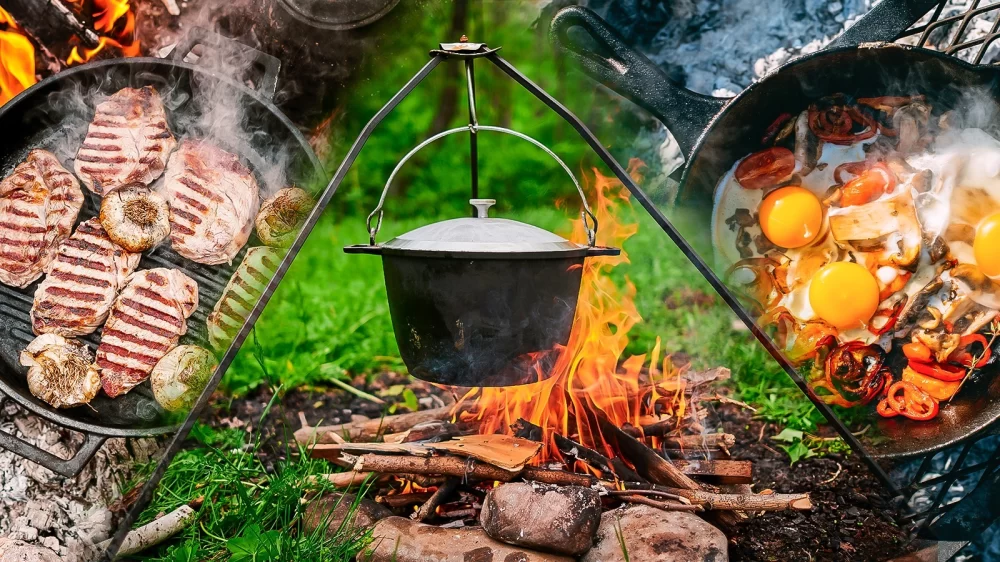
Cast iron cookware is perfect for campfire cooking. It can withstand high heat and provides even cooking temperatures. A skillet or Dutch oven can be used for frying, sautéing, stews, and baking.
2. Campfire Grate or Tripod
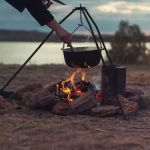
A campfire grate allows you to safely cook over the flames. A tripod is also a great option for hanging pots or cooking food over the fire. Both tools help elevate the cooking process and keep food safe from direct flame.
3. Skewers or Roasting Sticks
For roasting marshmallows, hot dogs, or vegetables, long skewers or roasting sticks are essential. They keep you at a safe distance from the flames while allowing you to cook your food evenly.
4. Heat-Resistant Gloves and Tongs
Handling hot cookware requires heat-resistant gloves and tongs to prevent burns. Always have a set of these tools on hand when cooking over a campfire.
Cooking Techniques and Tips
Cooking over a campfire can be both fun and challenging. Here are some techniques and tips for getting the best results:
1. Use Indirect Heat
To avoid burning food, use indirect heat by placing your cookware to the side of the fire or on a grate over the embers. This ensures that the food is cooked evenly without direct exposure to flames.
2. Keep the Fire at a Moderate Heat
A moderate fire is ideal for most campfire cooking. Too much heat can cause food to burn, while too little will make cooking slow and inefficient. Control the fire by adjusting the amount of wood and using embers for consistent heat.
3. Use Foil Packets for Easy Cooking
Cooking in foil packets is an easy and mess-free method. Simply wrap your ingredients in foil and place them on the grate or directly on the hot embers. This technique works well for vegetables, fish, and small cuts of meat.
Cleaning Up After Cooking
After enjoying your meal, cleaning up is essential for maintaining a safe and pleasant campsite:
1. Dispose of Food Waste Properly
Be sure to clean up all food scraps and dispose of them in a bear-proof trash can or designated waste disposal area. This helps keep wildlife away from your campsite.
2. Clean Cooking Gear Thoroughly
Wash all cookware and utensils with hot water and soap to avoid attracting pests. Be sure to dry everything thoroughly to prevent rusting and maintain the longevity of your campfire cooking gear.
Common Mistakes to Avoid
While campfire cooking is fun, there are a few common mistakes that can affect the quality of your meal and safety:
1. Cooking Over Too High a Flame
Cooking directly over high flames can cause food to burn on the outside while remaining raw inside. Always let the fire burn down to embers before cooking.
2. Not Using Enough Heat Protection
Ensure you have the right tools, such as gloves and tongs, to handle hot equipment safely. Never try to move hot pots or pans with your bare hands.
Cooking over a campfire is a rewarding and enjoyable experience if done safely and with the right techniques. For more tips and camping gear, check out Camping Rural for the best products to enhance your campfire cooking experience.
 Shamrock Village Manufactured Home Community3.0 (85 reviews)
 Shangri La3.0 (115 reviews)
 Lake Jennings Campground4.0 (679 reviews)
 Camp 645.0 (16 reviews)
 Cracker Lake RV Resort4.0 (56 reviews)
 Saint Andrew Trailer Park3.0 (10 reviews)
 10 Must-Visit Campgrounds in the Midwest for Your Next Outdoor Adventure
 Romantic Camping Spots for Couples: Perfect Getaways in Nature
 Ultimate Guide to Off the Grid Camping in Remote Locations
 How to Cook Over a Campfire Safely for an Enjoyable Outdoor Experience
 Vanlife in Winter: My Personal Experience Living on the Road
 From City to Camp: My Journey to Nature and What I Learned