How to Read a Topographic Map and Use a Compass for Wilderness Navigation
When exploring the great outdoors, knowing how to navigate using a topographic map and compass is a vital skill for any hiker, camper, or adventurer. Whether you're heading into remote wilderness areas or simply looking to improve your outdoor navigation skills, understanding the basics of map reading and compass use will keep you safe and confident on your journey. In this guide, we'll walk you through the essential steps to read topographic maps and use a compass effectively for wilderness navigation.
1. Understanding Topographic Maps
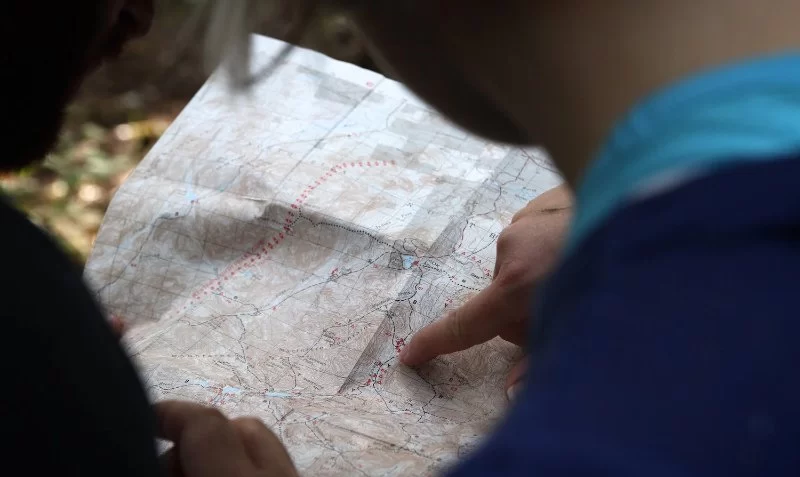
A topographic map is a detailed, accurate, and scaled representation of the natural and man-made features of an area. These maps display terrain, elevation, and other key features such as roads, rivers, trails, and landmarks. The main feature of a topographic map is the use of contour lines, which represent elevation and the shape of the land.
1.1. The Basics of Contour Lines
Contour lines on a topographic map connect points of equal elevation. These lines help you visualize the shape of the terrain, whether it's a steep mountain slope or a gentle valley. The closer the contour lines are to each other, the steeper the terrain. Conversely, when the lines are spaced far apart, the land is relatively flat.
1.2. Interpreting Elevation
Each contour line is marked with an elevation number, usually in feet or meters. The difference in elevation between two contour lines is called the contour interval, which is typically indicated on the map’s legend. Understanding these elevation changes will help you determine the difficulty of the terrain and plan your route accordingly.
2. Using a Compass for Navigation
A compass is a portable navigation tool that helps you orient yourself relative to the Earth's magnetic field. The key components of a compass include the needle, which points to magnetic north, and the rotating bezel, which is marked with degree increments (0–360 degrees) to help you find specific directions.
2.1. Understanding Compass Directions
Compasses are marked with directions—North (N), South (S), East (E), and West (W)—along with the intermediate directions (NE, NW, SE, SW). The compass needle always points to magnetic north, so you can use the compass to establish your bearing and orient yourself on a map.
2.2. Setting a Bearing with a Compass
To navigate using a compass, you'll need to set a bearing, which is the direction you want to travel. To do this:
- Place the compass on the map, aligning the edge of the compass with your start point and destination.
- Rotate the compass bezel so that the orienting lines inside the compass align with the map’s north-south grid lines.
- Once aligned, read the bearing indicated on the bezel. This bearing is the direction you’ll travel in.
- Hold the compass flat in your hand, and turn your body until the compass needle aligns with the orienting arrow on the bezel. Now, you’re facing the direction of your bearing.
2.3. Following Your Bearing
As you walk, keep checking your compass to ensure you're staying on course. It’s important to regularly recheck your bearing, especially if you’re traveling through dense forests or areas with few visible landmarks. Regularly verify that you are still heading in the right direction, adjusting as necessary.
3. Combining a Topographic Map and Compass for Accurate Navigation
To navigate in the wilderness, you must be able to use both your topographic map and compass together. This combination allows you to plot a route and follow it with precision, regardless of how unfamiliar the terrain might be.
3.1. Orienting the Map
Before heading out, you should orient your map to match the terrain. To do this, align your compass with the map's north-south lines, and rotate both the map and compass until the compass needle points to magnetic north. This will ensure that your map accurately reflects the land around you, allowing you to better navigate.
3.2. Plotting a Course
Once your map is oriented, use your compass to plot a course from your starting point to your destination. Mark the landmarks along the way, such as rivers, trails, or peaks, so you can identify them while navigating. If you’re traveling off-trail, take note of key features that you’ll encounter.
3.3. Adjusting for Declination
Magnetic north is not the same as true north, and the difference is known as magnetic declination. Depending on your location, the declination value can vary, and it’s important to adjust for this difference when navigating. Most maps will indicate the magnetic declination for that area, so make sure you account for it when using your compass to ensure accuracy.
4. Tips for Effective Wilderness Navigation
Wilderness navigation is a skill that improves with practice. Here are a few tips to help you become more confident in reading a topographic map and using a compass:
- Practice in familiar areas before heading into the wilderness.
- Use a clear, reliable compass, and check for magnetic interference from nearby electronics or metal objects.
- Double-check your bearings regularly to stay on track.
- Understand the terrain: study the map before your trip, and be aware of obstacles like rivers or cliffs.
5. Real-Life Example: Navigating in the Wilderness
During a recent trip to the Rocky Mountains, I had the opportunity to test out these navigation skills firsthand. The weather was unpredictable, and we found ourselves hiking through dense forests with minimal visibility. By using my topographic map and compass, I was able to navigate around obstacles and stay on course toward our campsite. It was an incredibly rewarding experience, and it proved the importance of these outdoor skills.
At Camping Rural, we believe in the importance of preparedness. Our website offers a range of products, including high-quality compasses, maps, and outdoor gear to help you succeed in your wilderness adventures. Whether you're a beginner or an experienced adventurer, having the right tools can make all the difference.

 Jellystone Park™ Waller4.0 (1808 reviews)
 Rhoades Mobile home park4.0 (4 reviews)
 Uncle Pudd's Cabin5.0 (1 reviews)
 Prado Conservation Camp #284.0 (23 reviews)
 Timberline Glamping Cheaha4.0 (111 reviews)
 Belle Passi Estates0.0 (0 reviews)
 10 Must-Visit Campgrounds in the Midwest for Your Next Outdoor Adventure
 Romantic Camping Spots for Couples: Perfect Getaways in Nature
 Ultimate Guide to Off the Grid Camping in Remote Locations
 How to Cook Over a Campfire Safely for an Enjoyable Outdoor Experience
 Vanlife in Winter: My Personal Experience Living on the Road
 From City to Camp: My Journey to Nature and What I Learned